
Sneezing through summer? Dreading ragweed season? Avoiding visits with friends because they have pets?
If your life revolves around checking the pollen count, carrying tissues everywhere, or taking allergy medications just to get through the day, you’re not alone.
Seasonal and environmental allergies affect millions of people every year. While antihistamines, nasal sprays, and eye drops can provide temporary relief (and save lives), they don’t answer the most important question: Why is your immune system reacting so strongly in the first place?
Allergies Are an Overactive Immune Response
Your immune system is designed to protect you from harmful invaders like bacteria, viruses, and parasites. With allergies, however, the immune system mistakes something harmless (such as pollen, pet dander, mold, or dust) as a dangerous threat. Instead of ignoring these harmless substances, your immune system releases inflammatory chemicals like histamine, leading to symptoms such as:
-
- Sneezing
-
- Runny or congested nose
-
- Itchy, watery eyes
-
- Sinus pressure
-
- Coughing
-
- Skin irritation
-
- Fatigue
-
- Brain fog
The question “What are you allergic to?” should also include “Why is your immune system so reactive?”
Why Is Your Immune System on High Alert?
There usually isn’t one single cause. Instead, many factors can gradually make the immune system more sensitive over time.
Chronic Inflammation
Inflammation acts like turning up the volume on your immune system. When your body is already dealing with chronic inflammation from poor nutrition, stress, obesity, insulin resistance, chronic infections, or inflammatory medical conditions, it may become more reactive to environmental allergens. Think of it like a smoke detector that’s become so sensitive it goes off every time you make toast.
Gut Health Matters More Than Most People Realize
About 70% of your immune system resides in and around your gastrointestinal tract. When the gut microbiome becomes imbalanced (a condition called dysbiosis) or the intestinal barrier becomes damaged (“leaky gut”), the immune system can become dysregulated.
Factors that may contribute include:
-
- Repeated antibiotic use
-
- Highly processed diets
-
- Low fiber intake
-
- Chronic stress
-
- Poor sleep
-
- Gastrointestinal infections
-
- Food sensitivities
When the gut isn’t functioning well, the immune system may become more likely to react to things that should normally be harmless.
Nutrient Deficiencies Can Affect Immune Balance
Your immune system requires adequate vitamins, minerals, and antioxidants to function appropriately.
Low levels of nutrients such as:
-
- Vitamin D
-
- Vitamin C
-
- Zinc
-
- Magnesium
-
- Omega-3 fatty acids
All may contribute to an immune system that is less able to regulate inflammation appropriately. Functional Medicine looks to identify what your body actually needs.
Chronic Stress Doesn’t Just Affect Your Mind
Stress affects far more than your mood. Long-term stress influences cortisol production, nervous system regulation, sleep quality, gut health, and immune function. When the body remains in a constant “fight-or-flight” state, the immune system often becomes less resilient and more reactive.
Improving sleep, supporting stress resilience, exercising appropriately, and calming the nervous system are often important pieces of an allergy treatment plan.
Environmental Exposures Can Add to the Burden
Sometimes the immune system is simply carrying too much of a load.
Repeated exposure to:
-
- High pollen counts
-
- Mold
-
- Dust mites
-
- Pet dander
-
- Air pollution
-
- Cigarette smoke
Reducing your total exposure can make a meaningful difference.
Simple Steps That Can Help During Allergy Season
While we’re working to understand the root causes, these simple habits can reduce your daily allergen exposure:
-
- Rinse your nose with saline after spending time outdoors.
-
- Shower and change clothes after being outside to remove pollen from your hair and skin.
-
- Keep windows closed on high-pollen days.
-
- Use a HEPA air purifier, especially in your bedroom.
-
- Wash bedding regularly in hot water.
-
- Consider wearing sunglasses outdoors to reduce pollen exposure to your eyes
For many individuals, supplements such as quercetin, vitamin C, and omega-3 fatty acids may also help support a healthy inflammatory response. Many of our patients find Vitamin C infusions very helpful to lower the immune ‘attack’ which drives allergies.
Because every person is different, it’s best to discuss supplementation with your healthcare provider.
Not All Allergy Evaluations Are the Same
Traditional allergy care often focuses on identifying what you’re allergic to. That’s important, but we also want to understand why your immune system has become so reactive.
At 4 Better Health, we take a personalized Functional Medicine approach that may include evaluating:
-
- Allergy blood testing
-
- Markers of inflammation
-
- Nutritional status
-
- Gut health
-
- Immune system balance
-
- Lifestyle factors that influence immune function
We believe in treating symptoms AND we work to identify factors that may be contributing to your body’s inflammatory response.
A Personalized Approach: Sublingual Immunotherapy (SLIT)
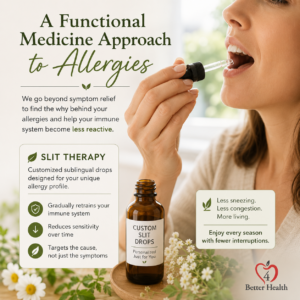
For many patients, this evaluation leads to customized Sublingual Immunotherapy (SLIT). SLIT consists of prescription allergy drops placed under the tongue that are formulated specifically for your unique allergy profile. Unlike medications that temporarily block histamine, SLIT works by gradually teaching your immune system to become less reactive to the allergens that trigger your symptoms.
Over time, many patients experience:
-
- Fewer allergy symptoms
-
- Reduced reliance on medications
-
- Improved quality of life
-
- Greater ability to enjoy the outdoors and spend time with pets
SLIT is personalized, convenient to take at home, and can be an excellent option for many individuals with seasonal or environmental allergies.
SLIT (Sublingual Immunotherapy) uses tiny, customized doses of allergens—placed under your tongue—to help your immune system gradually stop overreacting. It’s safe, effective, and can be done from the comfort of home. The difference is that the antigen is placed under your tongue in a customized liquid form. Learn how allergy drops work.
We treat more than just seasonal pollen. SLIT can address:
-
- Food sensitivities and allergies (like dairy, eggs, wheat, and more)
-
- Histamine intolerance
-
- Mold and dust allergies
-
- Pet dander
-
- Environmental triggers like trees, grasses, and ragweed
-
- Multiple or complex allergy cases
If your allergies are interfering with your sleep, your workouts, your ability to enjoy the outdoors, eating foods, or even visits with family and friends, it may be time to look beyond symptom management.
Whether you’re struggling with hives, food allergies, spring pollen, summer grasses, fall ragweed, pet dander, or year-round environmental allergies, a comprehensive Functional Medicine evaluation may help uncover why your immune system is reacting the way it is and what can be done about it. With fall allergy season approaching, now is an ideal time to begin evaluation and treatment before symptoms peak.
Your immune system doesn’t have to stay stuck in overreaction mode. We’re here to help it find better balance so you can enjoy every season. Learn more about SLIT therapy and take our Allergy quiz here.