Why seasonal allergies, gut health, hormones and histamine may be more connected than you think...
Fall in New England is beautiful. Cooler mornings, changing leaves, apple picking, hiking, football games and evenings around the fire are some of the best parts of living here. Unfortunately, fall can also be one of the toughest seasons for people with allergies.
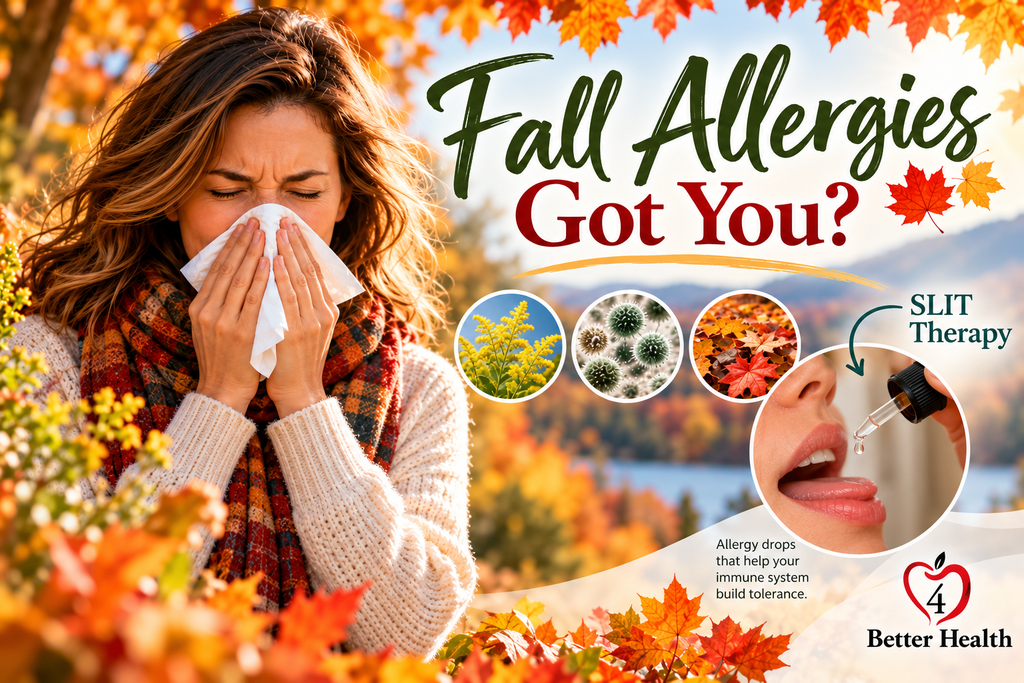
Most people associate seasonal allergies with spring, but late summer and fall bring their own combination of triggers. Ragweed pollen, outdoor mold, damp leaves and increased time spent indoors can all contribute to allergy symptoms. For some people, the symptoms are predictable: sneezing, itchy eyes, congestion and a runny nose. For others, fall brings something less obvious:
- Headaches and brain fog
- Fatigue and poor sleep
- Itchy skin, hives or eczema flares
- Digestive discomfort and food sensitivities
- Increased reactions to fragrances, skin products or environmental irritants
- Feeling like their body is suddenly reacting to everything
Why Are Fall Allergies So Common in New England?
Ragweed: A Major Fall Allergy Trigger
Ragweed is one of the most common causes of fall seasonal allergies throughout the Northeast. Its pollen is carried by the wind and can travel considerable distances, meaning you don’t need ragweed growing in your yard to experience symptoms. Ragweed season generally begins in late summer and continues through fall, often ending with the first significant frost.
Mold: The Hidden Fall Trigger
Those beautiful piles of colorful leaves can create the perfect environment for mold. Outdoor mold thrives in damp soil, decaying vegetation and fallen leaves. Raking, leaf blowing, gardening and hiking through damp wooded areas can increase exposure to airborne mold spores.
Mold isn’t just an outdoor concern. As temperatures drop, we close our windows and spend more time inside. Damp basements, bathrooms, crawl spaces, HVAC systems and previous water damage can contribute to indoor mold exposure. For someone already struggling with ragweed, additional mold exposure may increase their overall allergy burden.
Understanding Your Histamine Bucket
Histamine isn’t inherently bad. Your body needs it. It plays important roles in immune defense, stomach acid production, nervous-system communication and inflammation. During an allergic reaction, immune cells called mast cells release histamine and other inflammatory chemicals, producing many of the symptoms we associate with allergies.
Your body also has mechanisms to break down histamine, including enzymes such as diamine oxidase (DAO) and histamine N-methyltransferase (HNMT). Problems can arise when histamine release, exposure and the body’s ability to metabolize it become imbalanced. We often explain this using the concept of a ‘histamine rain barrel or ‘bucket.’**
Imagine that your body has a certain capacity to tolerate histamine-related triggers. Throughout much of the year, you might tolerate a glass of wine, certain foods, exercise, stress and occasional environmental allergens without difficulty. But then spring or fall arrives. Suddenly, your bucket may feel like it’s overflowing.
Some notice that wine causes congestion, certain foods trigger headaches, skin becomes more reactive or your seasonal allergies seem much worse than previous years. This doesn’t necessarily mean a person has developed multiple new allergies. It may mean that your overall histamine burden (‘bucket’) has increased or your threshold for symptoms has changed.
**The histamine bucket is a useful way to understand overlapping triggers, although it is not a formal medical diagnosis or a way to measure histamine levels.
Hypervigilance
Have you ever felt like your body suddenly reacts to everything? Perfume bothers you. Wine causes flushing. Certain foods trigger digestive symptoms. Skin products you’ve used for years suddenly cause irritation. Smoke, cleaning products or air fresheners make you congested.
When allergic inflammation is active, sensitive tissues such as the nasal lining may become more reactive to environmental irritants. Not every reaction represents a true allergy or histamine intolerance. Fragrances, smoke and other irritants can cause symptoms through nonallergic pathways as well. Rather than eliminating more foods, products and activities indefinitely, Functional Medicine asks a different question: “What is contributing to your overall inflammatory and histamine burden, and how can we reduce it?”
Your Gut Plays an Important Role in Histamine Regulation
Your gut and immune system are closely connected. One of the body’s important histamine-degrading enzymes is diamine oxidase, or DAO. DAO is produced primarily by mature intestinal cells and helps break down histamine from foods within the gastrointestinal tract. When intestinal health is compromised, histamine handling may also be affected.
Intestinal inflammation, certain gastrointestinal disorders, medications and changes in digestive function may contribute to reduced histamine tolerance in susceptible individuals. This is one reason we look more closely at gut health when patients experience persistent histamine-type symptoms, particularly when accompanied by:
- Bloating, abdominal discomfort or irregular bowel movements
- Reflux or digestive irritation
- Food-related flushing, itching or headaches
- Changes in food tolerance
- Persistent inflammatory or allergy-type symptoms
Gut microbiome changes may also influence histamine biology because certain intestinal bacteria can produce histamine. Depending on the individual, this may involve evaluating intestinal inflammation, microbiome imbalances, digestive health, medications, nutrient status and other factors affecting the intestinal environment. However, not every digestive symptom is caused by histamine, and histamine intolerance itself remains an evolving area of research.
And Then There Are Hormones: The Menopause–Histamine Connection
This is an especially important conversation for women in their 40s, 50s and beyond. Patients frequently tell us:
“I never had allergies like this until perimenopause” or “Suddenly, I’m reacting to foods, wine, fragrances and skin products that never bothered me before.”
There is a physiological explanation: Estrogen, progesterone and testosterone all interact with the immune system, inflammatory pathways and histamine regulation. As these hormones fluctuate and eventually decline during perimenopause and menopause, the body’s immune responses, mast-cell activity and tolerance to environmental triggers may change.
Mast cells are immune cells responsible for releasing histamine and other inflammatory chemicals. Sex hormones influence how these cells behave, although their effects depend on hormone levels, tissue type and individual physiology. Progesterone and testosterone have demonstrated immune-modulating and anti-inflammatory effects in certain settings. As these hormones decline, some women may experience changes in inflammatory signaling and immune regulation.
Estrogen also influences mast-cell activity, intestinal barrier function and mucosal immunity. However, its relationship with histamine is complex. Estrogen can stimulate histamine release under certain conditions while also supporting protective functions throughout the body.
The Gut–Hormone–Histamine Connection
Menopause-related hormonal changes can influence the intestinal microbiome, gut barrier integrity and immune activity. Because the intestinal lining produces DAO (as discussed above this is an enzyme responsible for breaking down dietary histamine), changes in intestinal health may also affect histamine tolerance.
Although research has not established that declining sex hormones directly reduce DAO production, we know that hormones influence several systems involved in immune and intestinal health. For some women, these changes may contribute to a lower threshold for allergy-like or histamine-related symptoms, particularly when combined with seasonal pollen, mold, gut inflammation, stress or poor sleep.
This may help explain why congestion, itchy skin, headaches, digestive symptoms or food sensitivities sometimes become more noticeable during perimenopause and menopause.
What About Hormone Replacement Therapy (HRT)?
Hormone replacement therapy deserves an individualized conversation rather than a blanket statement that estrogen is either good or bad for histamine. Appropriately prescribed HRT can offer substantial benefits for menopausal symptoms and, in appropriate patients, help prevent bone loss.
Because sex hormones interact with immune and inflammatory pathways, some women may notice changes in allergy-type symptoms when starting or adjusting HRT. However, evidence that HRT consistently improves or worsens histamine intolerance or seasonal allergies is limited (research is limited – therefore evidence is limited).
How Can You Reduce Your Fall Allergy Burden?
The first strategy is often the simplest: reduce how many allergens you’re exposed to.
During high-pollen or high-mold days, keep windows closed when practical and use filtered indoor air. After spending time outdoors, shower, wash your hair and change clothes to avoid bringing pollen and mold spores into your bedroom.
If mold is a significant trigger, consider having someone else rake leaves or use a leaf blower. Both activities can aerosolize mold spores. And if you have to do the leaf raking; consider using Xlear prior to raking (see below).
Inside your home, pay attention to damp basements, plumbing leaks, condensation and previous water damage. Addressing the moisture source and using dehumidifiers are essential. Adding a HEPA air purifier, particularly in the bedroom, may help reduce airborne allergens.
SLIT Allergy Therapy: Helping the Immune System Become Less Reactive
For individuals with persistent environmental and seasonal allergies, sublingual immunotherapy (SLIT) often provides an opportunity to address the allergic response itself rather than simply managing symptoms. SLIT involves administering carefully selected allergens under the tongue to help the immune system gradually develop greater tolerance.
Depending on allergy testing, treatment options and the specific formulation, SLIT often addresses environmental triggers such as ragweed, grasses, trees and dust mites by reducing the systemic immune response. SLIT reduces allergic sensitivity over time, potentially improving symptoms and decreasing reliance on medications. Because immunotherapy works gradually, it is a long-term strategy rather than a quick fix for a difficult allergy day.
Learn more about SLIT allergy therapy at 4 Better Health →
Nasal Support: Xlear
We frequently recommend Xlear as part of a nasal hygiene routine during allergy season. Saline-based nasal spray made with xylitol rinses can help physically remove pollen, dust and other particles from the nasal passages while moisturizing irritated tissue. This rinse helps to block some of the microbes that enter the nasal passage as well as acting like a ‘wash’ before or after exposure.
Nutraceutical Support
D-Hist: Comprehensive Seasonal Support
D-Hist is a combination supplement commonly used for seasonal respiratory support. Depending on the formulation, it may contain nutrients and botanical compounds such as quercetin, vitamin C, bromelain, small amounts of N-acetyl cysteine (NAC) and stinging nettle. These ingredients have been studied for various antioxidant, inflammatory and allergy-related pathways, although evidence for the complete supplement as a treatment for seasonal allergies is limited.
Alpha Iso-Quercetin: Supporting Mast-Cell and Inflammatory Pathways
Quercetin is a plant-derived flavonoid studied for its antioxidant and anti-inflammatory properties. Laboratory research suggests quercetin may influence mast-cell activation and the release of inflammatory mediators, including histamine.
Human evidence is still emerging, but a small randomized, placebo-controlled trial of a bioavailable quercetin preparation found improvements in several seasonal allergy symptoms, including sneezing, eye itching and nasal discharge. Alpha iso-quercetin is a more water-soluble quercetin derivative that may offer improved absorption.
NAC: Supporting Glutathione and Respiratory Health
N-acetyl cysteine (NAC) is a precursor to glutathione, one of the body’s major antioxidant systems. NAC also has mucolytic properties, meaning it can help thin the thick mucus and respiratory secretions. NAC is a great support to help lower oxidative stress as well.
What About Vitamin C IV Therapy?
Vitamin C plays important roles in antioxidant defense, immune function and histamine biology. Research has explored whether intravenous vitamin C may influence circulating histamine levels and allergy-related symptoms.
One clinical study involving 89 patients found that 7.5 grams of intravenous vitamin C was associated with reduced serum histamine concentrations, particularly among participants with allergic conditions.
Another observational study involving 71 patients reported improvements in allergy-related respiratory symptoms, skin symptoms, fatigue and sleep disturbances following IV vitamin C.
These findings are interesting, but the studies were not definitive randomized controlled trials. They cannot establish that IV vitamin C reliably treats seasonal allergies or histamine intolerance. At 4 Better Health, we recommend Vitamin C IV therapy as an adjunctive option for appropriately screened patients * AND this month (October 2026), we are having a big Vitamin C Infusion sale; only $89 for a Simply C infusion and 20% off immune, recovery or travel infusions.
When Fall Allergies Aren’t Just Fall Allergies
If every fall your nose runs and your eyes itch when ragweed levels rise, the connection may be relatively straightforward.
But what if you’re noticing something different?
“My allergies are suddenly much worse than they used to be.”
“I’m reacting to foods I’ve eaten my entire life.”
“My skin is itching, and I don’t know why.”
“Wine suddenly makes me congested.”
“I feel terrible whenever I’m in my basement or visiting my parents/inlaws.”
“Everything changed when I entered perimenopause.”
These are situations where we may need to look beyond seasonal pollen alone.
Your symptoms may reflect several overlapping influences:
Pollen + Mold + Gut Health + Histamine Metabolism + Hormones + Sleep + Stress + Environmental Exposures
Reducing even one contributing burden may help improve symptoms. Addressing several relevant factors may provide greater relief. Of course, persistent or worsening symptoms also deserve appropriate medical evaluation to distinguish allergic disease from other conditions.
At 4 Better Health, we look at the drivers for new food reactions, recurrent hives, breathing symptoms or significant gastrointestinal complaints should not automatically be attributed to histamine. We believe in looking at the connections rather than treating every symptom as an isolated problem. Our functional medicine approach considers environmental exposures, digestive health, nutrition, hormones, immune function and lifestyle to help identify potential contributors to symptoms.
If your fall allergies have become more intense, you’re reacting to foods or products you previously tolerated, or your symptoms seem to have changed alongside your hormones or digestive health, a comprehensive evaluation may help clarify what’s happening. Fall should be something you enjoy, not something you have to endure.
This article is for educational purposes and is not a substitute for individualized medical care. Supplements, immunotherapy and IV treatments should be considered in consultation with a qualified healthcare professional.