
The Best Time to Protect Your Brain Is Decades Before You Forget
Every week, someone sits across from us and shares the same fear: “My mother had Alzheimer’s,” or “My grandfather had dementia, so I assume it will happen to me too.”
If you have watched someone you love slowly change because of dementia, that fear is understandable. Few diseases affect a family as profoundly. Dementia does not only steal memories. It can take away confidence, independence, familiar conversations, family traditions, and eventually the ability to recognize the people who matter most. And it’s a massive caregiver challenge.
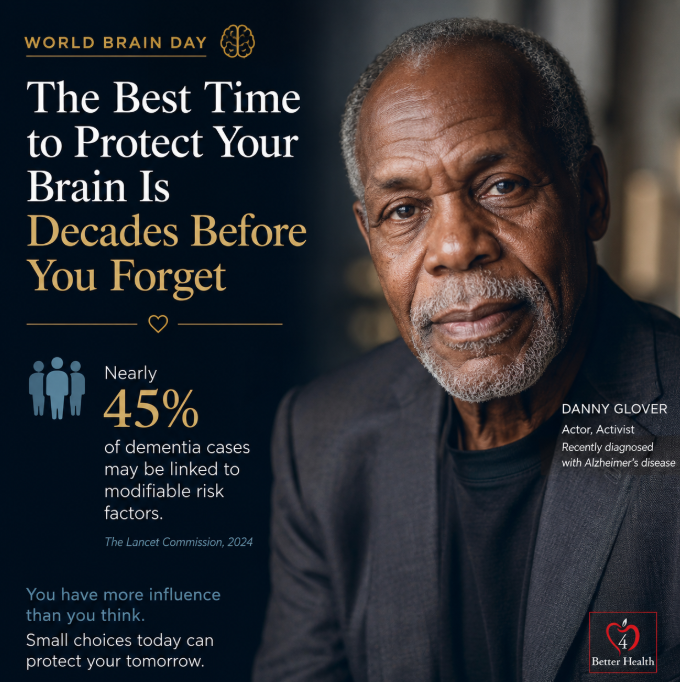
We have watched this happen to people we once knew at the height of their lives. President Ronald Reagan, Tony Bennett, Glen Campbell, Rita Hayworth and now Danny Glover.
We remember these people as talented, successful, quick-witted, and independent. Their families, however, experienced something much more personal: watching someone they love become increasingly fragile, dependent, and absent. Millions of families have witnessed the same transformation in their own homes. A parent who once managed everything now needs help with every decision, washing, dressing. A spouse becomes a full-time caregiver. Children slowly assume responsibility for the person who once cared for them.
For many years, families were left believing there was little they could do except wait, worry, and hope. Today, the conversation is beginning to change.
The 2024 Lancet Commission concluded that as many as 45% of dementia cases may be associated with potentially modifiable risk factors. These include high blood pressure, elevated cholesterol, diabetes, physical inactivity, obesity, smoking, excessive alcohol intake, hearing and vision loss, depression, social isolation as factors in OUR control.
That finding does not mean every case of dementia can be prevented, nor does it mean someone caused their own disease. Genetics, aging, environmental exposures, medical conditions, and factors we do not yet fully understand all play a role. It does mean, however, that there may be much more we can influence (by nearly 50%!) than many people have been told.
At 4 Better Health, that is where our passion lies. We do not believe brain-health care should start when someone starts forgetting names or getting lost while driving. We believe it should begin years—and ideally decades—earlier, while there is still time to identify and address the biological changes that may make the brain more vulnerable.
The brain is not separate from the rest of the body. It is affected by blood sugar, circulation, inflammation, sleep, thyroid function, nutrient availability, digestive health, oral health, muscle mass, stress, movement, hearing, vision, and social connection. When we protect those systems, we are also supporting the brain.
The Drivers We Look for Before Memory Changes Begin
One of the first areas we evaluate is metabolic health. You may have heard Alzheimer’s disease described as “type 3 diabetes.” That is not an official medical diagnosis, but the phrase reflects the growing recognition that insulin resistance and impaired glucose metabolism can also affect the brain.
Your brain requires a tremendous amount of energy. When insulin signaling becomes impaired, brain cells may become less efficient at using glucose. Over time, elevated glucose and insulin can also contribute to inflammation, oxidative stress, blood-vessel injury, and other changes associated with cognitive decline. This is why a single annual fasting glucose result does not always tell us enough. Fasting insulin, hemoglobin A1c, C-peptide, triglycerides, waist circumference, and sometimes continuous glucose-monitor data can provide a more complete picture.
Blood pressure is equally important. The small blood vessels supplying the brain are vulnerable to years of elevated pressure. Even when a person feels perfectly well, hypertension can contribute to vascular injury, reduced cerebral blood flow, white-matter changes, stroke, and cognitive decline. Protecting the heart and blood vessels is one of the most important ways to protect the brain.
Inflammation is another piece of the puzzle. Inflammation is necessary when the body is responding to an infection or injury, but chronic inflammation is different. It can be driven by blood-sugar dysregulation, smoking, periodontal disease, untreated sleep apnea, autoimmune disease, chronic infections, gastrointestinal dysfunction, environmental exposures, nutrient deficiencies, or excess visceral fat.
Visceral fat is the fat stored deep within the abdomen around the internal organs. Unlike the fat directly beneath the skin, visceral fat is metabolically active. It releases inflammatory signals and is strongly associated with insulin resistance, cardiovascular disease, and metabolic dysfunction. Research has also connected greater visceral adiposity with poorer cognitive performance, vascular injury, neuroinflammation, and changes in brain volume.
That is why we look beyond weight alone. A person can lose weight while also losing valuable muscle, and someone whose weight has barely changed may still be gaining visceral fat. Neither situation is fully captured by the bathroom scale.
Using InBody testing allows us to monitor skeletal muscle mass, body-fat percentage, and visceral-fat level. Muscle is not merely important for appearance or mobility. It is one of the body’s largest sites for glucose disposal and an active endocrine organ that releases signaling molecules called myokines. These signals may support insulin sensitivity, reduce inflammation, and participate in communication between muscle and the brain. Preserving muscle therefore matters not only for preventing falls and maintaining independence, but also for long-term metabolic and cognitive resilience.
Sleep must also be part of the discussion. During sleep, the brain performs essential maintenance and waste-clearance functions. Repeatedly missing restorative sleep may interfere with those processes and worsen blood sugar, appetite regulation, inflammation, blood pressure, and cognitive performance. Untreated obstructive sleep apnea is especially concerning because it exposes the brain to repeated drops in oxygen and surges in stress hormones throughout the night.
We also evaluate nutrient status because the brain cannot repair itself or manufacture neurotransmitters without the necessary raw materials. Vitamin B12, folate, vitamin B6, vitamin D, magnesium, iron, zinc, copper, omega-3 fatty acids, protein, choline, and other nutrients all contribute to neurological function. Testing becomes particularly important for people with celiac disease, inflammatory bowel disease, bariatric surgery, chronic digestive symptoms, restricted diets, long-term acid-blocking medication use, or other conditions that can interfere with digestion and absorption.
Brain Health Lab Guide
One of the most common questions we hear is, “What should I actually have checked?”
There is no single dementia blood test, and laboratory results should always be interpreted in the context of the individual. The targets below represent preventive ranges we commonly consider when assessing metabolic, cardiovascular, inflammatory, thyroid, and nutrient factors that may influence brain health. They are not diagnostic cutoffs or a substitute for individualized medical care.
| Area assessed | Test or measurement | Preventive target commonly considered | Why we evaluate it |
| Genetic susceptibility | APOE genotype | No “optimal” genotype; know your status only when appropriate | APOE ε4 can increase susceptibility, but it does not determine an inevitable outcome |
| Methylation and vascular health | Homocysteine | Approximately 6–8 µmol/L | Elevated levels may be associated with vascular injury and cognitive decline |
| Inflammation | hs-CRP | Below 1.0 mg/L, with lower values often preferred when clinically appropriate | Helps identify systemic inflammatory burden |
| Glucose regulation | Fasting glucose | Approximately 75–90 mg/dL | Persistent elevation may indicate impaired glucose control |
| Long-term glucose exposure | Hemoglobin A1c | Often below 5.4% in prevention-focused care | Reflects average glucose exposure over approximately three months |
| Early insulin resistance | Fasting insulin | Commonly 2–6 µIU/mL | May become elevated years before fasting glucose reaches the diabetic range |
| Insulin resistance | HOMA-IR | Often below 1.0–1.5 | Estimates insulin resistance using fasting glucose and fasting insulin |
| Vascular health | Blood pressure | Generally below 120/80 mmHg, individualized for the patient | Long-term hypertension damages small blood vessels supplying the brain |
| Lipid-related risk | ApoB | Often below 80 mg/dL; lower targets may apply with greater risk | Reflects the number of atherogenic particles contributing to vascular disease |
| Inherited cardiovascular risk | Lipoprotein(a) | Lower is preferable; interpret by assay units and personal risk | Elevated levels can increase lifelong vascular risk |
| Thyroid function | TSH, free T4 and free T3 | No single universal “optimal” value; assess together with symptoms and medications | Both insufficient and excessive thyroid activity may affect cognition |
| Vitamin B12 status | B12 and methylmalonic acid | Adequate B12 with normal MMA | MMA can uncover functional B12 insufficiency even when serum B12 appears acceptable |
| Folate metabolism | Folate | Adequate, interpreted with B12 and homocysteine | Necessary for methylation and normal homocysteine metabolism |
| Vitamin D | 25-hydroxy vitamin D | Commonly 40–60 ng/mL, individualized | Supports immune, musculoskeletal, and neurological health |
| Omega Profile | Omega-3 Index | Over 6 | Reflects EPA and DHA incorporated into red-blood-cell membranes |
| Iron status | Ferritin and iron studies | Middle of reference range | Both iron deficiency and iron overload may be clinically important |
| Magnesium | RBC magnesium | Often the middle to upper portion of the laboratory range | Magnesium supports energy production, glucose regulation, and neurological function |
| Body composition | Skeletal muscle mass | Work at having more muscle than body fat | Greater muscle supports glucose disposal, mobility, and metabolic resilience |
| Body composition | Visceral-fat level | Less than 10 | Visceral fat contributes to inflammation and insulin resistance |
Because laboratory methods, units, medications, age, medical history, and personal risk vary, these values should never be interpreted in isolation. For example, APOE testing requires thoughtful counseling because it identifies susceptibility rather than certainty. Thyroid results must be interpreted alongside symptoms and treatment status. Homocysteine should be considered with B12, folate, B6, kidney function, and genetics. Iron and copper should not be supplemented simply because one marker appears low without understanding the larger pattern.
Other testing may be appropriate depending on the individual, including a complete blood count, comprehensive metabolic panel, C-peptide, fibrinogen, lipid-particle testing, uric acid, vitamin B6, zinc, copper, ceruloplasmin, selenium, CoQ10, comprehensive nutrient testing, celiac screening, sleep evaluation, hearing assessment, and cognitive baseline testing, Working with a functional health provider helps to identify the testing that helps answer the questions raised by that unique person’s symptoms, family history, diet, medications, lifestyle, and existing medical conditions.
Five Lifestyle Choices That Can Change the Trajectory
The science of dementia prevention can feel overwhelming, but the daily actions that support the brain do not need to be complicated.
- #1 Move regularly and build muscle. Walking remains valuable, particularly when it replaces long periods of sitting, but walking alone may not preserve all the muscle and strength we need as we age. Resistance training two to four times per week can improve strength, insulin sensitivity, balance, bone health, and body composition. Exercise has also been consistently associated with healthier cognitive aging. Even relatively modest amounts of physical activity may offer meaningful benefit.
- #2 Monitor blood sugar, insulin and A1c closely. This does not mean everyone must eliminate carbohydrates or follow one specific diet. It means building meals that create a steadier metabolic response. We generally encourage adequate protein, high-fiber vegetables, healthy fats, minimally processed carbohydrates, and movement after meals. Sleep, stress, muscle mass, meal timing, and the order in which foods are eaten can all influence glucose response.
- #3 Protect sleep and address sleep apnea. Seven or eight hours in bed does not guarantee restorative sleep. Snoring, waking with headaches, daytime sleepiness, nighttime urination, gasping, or waking unrefreshed may all justify further evaluation. Treating sleep apnea can improve oxygenation, blood pressure, energy, mood, glucose regulation, and overall quality of life.
- #4 Nourish the brain rather than merely eating fewer calories. The brain and muscles require protein, omega-3 fats, vitamins, minerals, antioxidants, and adequate hydration. A pattern built around vegetables, berries, beans, nuts, seeds, olive oil, fish, eggs, and other high-quality proteins provides far more protection than a diet dominated by ultra-processed foods. For some people, targeted supplementation is appropriate, but it should be based on diet, laboratory results, medical history, and individual need.
- #5 Remain connected, curious, and engaged. Social isolation, hearing loss, depression, and reduced cognitive stimulation can all increase vulnerability. Protecting the brain may include treating hearing or vision loss, learning a new skill, playing music, reading, writing by hand, volunteering, spending time with friends, caring for grandchildren, joining a class, or continuing meaningful work. The activity itself matters, but so does the sense of connection, competence, and purpose it creates.
None of these choices guarantees that a person will never develop dementia. That is not a promise anyone can responsibly make. Together, however, they can improve many of the metabolic, vascular, inflammatory, and lifestyle factors associated with how the brain ages.
Protecting More Than Memory
Most people do not come into our office wanting more years (ie: to live longer). They want more life and health (Healthspan vs Lifespan). They want to remember their grandchildren’s names. They want to travel with their spouse, manage their own home, read a book, laugh with friends, drive safely, tell their stories, and recognize the faces gathered around the dinner table.
Protecting the brain is about protecting all of that. This World Brain Day, we want to educate and empower you to stop believing that genes dictate your health (or lack thereof). We want you to share this article to help others ask more questions, move more, watch their blood sugar and get help for sleep or hearing disorders.
We’re passionate that people understand that a family history is important, but it does not dictate the future. Genetics may influence susceptibility, but they exist within a much larger story involving blood sugar, blood pressure, circulation, inflammation, sleep, hearing, nutrition, movement, muscle, visceral fat, mental health, and connection.
Share this article. Share our prior Dementia article too!
The conversation about dementia should not begin only when someone forgets a name. It should begin decades earlier, while we still have time to measure risk, strengthen the body, support the brain, and make thoughtful changes. Let’s protect the memories, relationships, independence, and identity that make years worth living.
If you are concerned about your memory, have a family history of dementia, or want to take a more proactive approach to healthy aging, we would be honored to help. A Functional Medicine evaluation can help identify your individual risk factors, determine which testing is appropriate, and create a personalized plan for protecting both your lifespan and your health span. Take action this month and let’s all celebrate World Brain Day!
References
World Federation of Neurology. World Brain Day 2026: Brain Health, Access for All. https://wfneurology.org/world-brain-day-2026
Alzheimer Europe. 2024 Lancet Commission underscores the potential for dementia risk reduction, identifying 14 modifiable risk factors across the life course. https://www.alzheimer-europe.org/news/2024-lancet-commission-underscores-potential-dementia-risk-reduction-identifying-14-modifiable
Nichols E, et al. Estimation of the global prevalence of dementia in 2019 and forecasted prevalence in 2050: an analysis for the Global Burden of Disease Study 2019. The Lancet Public Health. https://www.thelancet.com/journals/lanpub/article/PIIS2468-2667(21)00249-8/fulltext
Alzheimer’s Association. 2020 Alzheimer’s Disease Facts and Figures fact sheet. https://aaic.alz.org/downloads2020/2020_Fa
Brookmeyer R, et al. National estimates of the prevalence of Alzheimer’s disease in the United States. https://pmc.ncbi.nlm.nih.gov/articles/PMC3052294/
A systematic review on type 3 diabetes: bridging the gap between metabolic dysfunction and Alzheimer’s disease. Diabetology and Metabolic Syndrome. https://link.springer.com/article/10.1186/s13098-025-01930-2
Hwang J, et al. Mid and late life physical activity and dementia risk. JAMA Network Open, summarized by Boston University School of Public Health. https://www.bu.edu/sph/news/articles/2025/mid-and-late-life-physical-activity-may-reduce-dementia-risk-by-up-to-45/
Wanigatunga A, et al. Small amounts of moderate to vigorous physical activity are associated with big reductions in dementia risk. Johns Hopkins Bloomberg School of Public Health. https://publichealth.jhu.edu/2025/small-amounts-of-moderate-to-vigorous-physical-activity-are-associated-with-big-reductions-in-dementia-risk
Effects of Resistance Training on Motor and Cognitive Function in Older Adults with Alzheimer’s Disease: A Systematic Review. https://www.ncbi.nlm.nih.gov/pmc/articles/PMC12691713/
The Muscle Brain Axis in Aging: Mechanistic and Clinical Perspectives on Resistance Training and Cognitive Function. https://www.ncbi.nlm.nih.gov/pmc/articles/PMC12838325/
Microbiota Gut Brain Axis Dysregulation in Alzheimer’s Disease: Multi Pathway Effects and Therapeutic Potential. https://www.ncbi.nlm.nih.gov/pmc/articles/PMC11081173/
Xu C, Bi S, Zhang W, Luo L. The effects of creatine supplementation on cognitive function in adults: a systematic review and meta-analysis. Frontiers in Nutrition, 2024. https://www.frontiersin.org/journals/nutrition/articles/10.3389/fnut.2024.1424972/full
The Relationship of Omega 3 Fatty Acids with Dementia and Cognitive Decline: Evidence from Prospective Cohort Studies. ScienceDirect. https://www.sciencedirect.com/science/article/pii/S0002916523463204
Association of vitamin D with risk of dementia: a dose response meta analysis of observational studies. https://pmc.ncbi.nlm.nih.gov/articles/PMC12457182/
Vitamin D deficiency as a risk factor for dementia and Alzheimer’s disease: an updated meta-analysis. BMC Neurology. https://link.springer.com/article/10.1186/s12883-019-1500-6
Sleep disorders increase the risk of dementia, Alzheimer’s disease, and cognitive decline: a meta-analysis. https://www.ncbi.nlm.nih.gov/pmc/articles/PMC12181552/
BrightFocus Foundation. Sleep Apnea and Dementia. https://www.brightfocus.org/resource/sleep-apnea-and-dementia/