
Is Bigger Always Better?
The portions, servings, helpings, slices, and amounts of what we eat have grown dramatically over the past two decades.
Consequently, the bigger-is-better motto has taken over the food industry, in conjunction with mass marketing to convince us to buy bigger sizes as a result of saving money. We had a client that told us she “always gets the Taco Bell Value Meal” because it comes with 3 tacos and a large soda which costs less than one taco and a large soda”.
Supermarkets and restaurants use the promise of better value as a way of pushing extra food onto consumers.
Bigger portions mean we eat more than we need. When a larger portion is placed in front of us, we tend to eat 30% to 50% more! Most often, we don’t even realize that we are eating more. In a recent study, women ate 31% more and men ate 56% more as a result of being served a 12-inch sub sandwich instead of a 6-inch sandwich.
How can you curb your portions 4 Better Health?
- Use smaller plates (dessert plates are perfect)
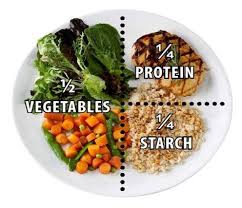
- 1/2 of your plate should be veggies
- A meat portion should be the size of a deck of cards (or the palm of your hand)
- A fish portion is the size of your checkbook
- Grain or starch portions (rice, quinoa, pasta, potato) should be the size of a tennis ball
- A slice of bread should be the size of a cassette tape
- A pancake (or waffle) portion is the size of ONE cd or DVD
- A fruit portion is the size of a baseball
- A cheese portion is the size of 5 dice
- An ice cream portion is the size of a baseball
- Dried fruits and nut portions are the sizes of a golf ball
- A cereal portion is typically 1/2 cup… we dare you to measure yours tomorrow!